Why We Only Make Clothes for Girls — And Why That's Controversial
- Tweeny Mini
- Jul 9
- 5 min read

The Short Answer

Tweeny Mini makes clothes exclusively for girls because we believe specialization creates bspecialisationetter fit, better design, and better representation than a one-size-fits-all approach. It's a deliberate business and design philosophy, not an accident — and yes, it puts Tweeny Mini at odds with a growing gender-neutral kids' fashion movement. We think that tension is worth talking about honestly.
If you've landed here searching for "girls clothing brand," "tween girls fashion," or "why does Tweeny Mini only make girls clothes," this is the full story.
Tweeny Mini's Origin: Solving One Problem Really Well

Tweeny Mini didn't start as a reaction to anyone else's approach to kids' fashion. It started with a simple observation: girls between the ages of roughly 7 and 14 — the "tween" years — are one of the hardest age groups to dress well. Kids' sections cut off too early. Juniors' sections skew too grown-up. Girls in this in-between stage are often left choosing between clothes that are too babyish or clothes that are trying too hard to look like adult fashion.
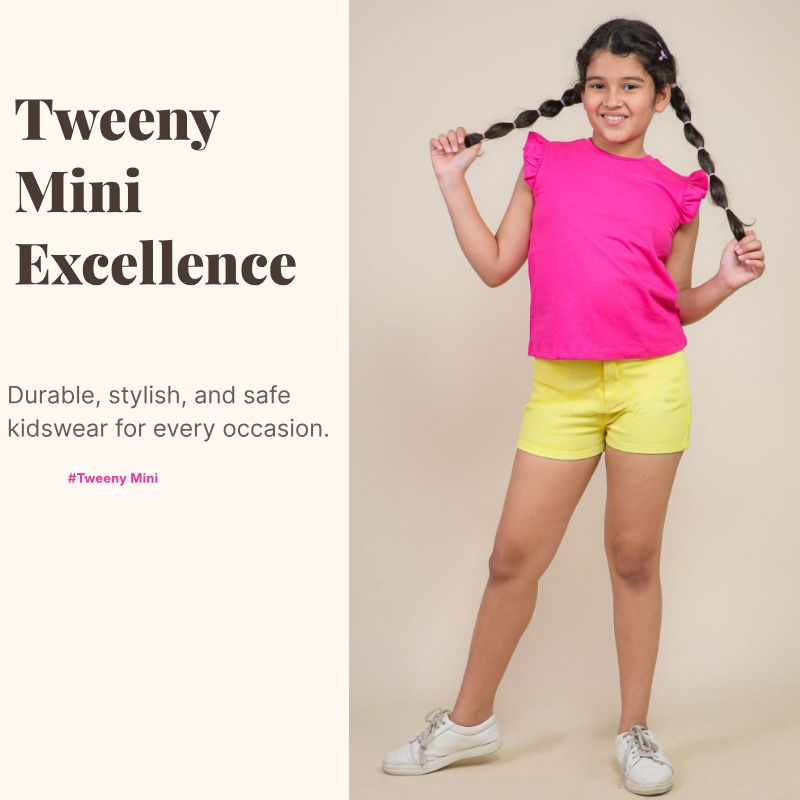
Tweeny Mini exists to fix that specific gap. By focusing only on girls' tween fashion, Tweeny Mini can obsess over the details that matter at this age: modest but stylish cuts, room to move, fabrics that hold up to real play, and designs that let a nine-year-old feel like herself instead of like a shrunken adult or an oversized toddler. That focus is only possible because Tweeny Mini isn't splitting its attention, its factories, or its design team across boys' wear, unisex basics, and everything in between.
Why "Only Girls" Is a Design Decision, Not Just a Marketing One

A lot of brands describe themselves as girls' clothing brands but really just mean "girls' clothing is one of our categories." Tweeny Mini took a different route: girls' fashion is the only category, and every decision — sizing blocks, fabric sourcing, print design, seasonal drops — is built around that single customer.
This shows up in practical ways:
Sizing built for girls' actual growth patterns in the tween years, rather than a unisex block adjusted after the fact.
Prints, colors, and silhouettes designed with tween girls' preferences in mind, based on direct feedback rather than assumption.
A merchandising calendar tuned to what girls' fashion actually needs each season — school, dance, sports, parties — instead of a generic kids' catalog.
For Tweeny Mini, "clothes for girls" isn't a label slapped on after the fact. It's the starting point for every product decision the brand makes.
Why That's Controversial in 2026

Here's where Tweeny Mini's approach runs into real debate. Kids' fashion has been moving toward gender-neutral and gender-inclusive lines for several years now. Major retailers have <cite index="2-1">expanded gender-neutral clothing and home decor offerings in response to resistance from parents and kids to traditional gender norms in apparel</cite>, and brands like Primary have built their entire identity around unisex basics designed to work for every kid regardless of gender.
The arguments on that side of the debate are genuine and worth acknowledging. Some designers point out that "boys" and "girls" categories can be a limiting shopping experience — both for kids whose identities don't fit neatly into those categories, and for kids who simply like colors or styles outside what tradition assigns to their gender</cite>. There's also a real, separate complaint from parents that has nothing to do with gender-neutral fashion at all: many say girls' clothing sections lean toward shorter shorts, crop tops, and cutout swimsuits that feel inappropriate for young children</cite>, which is part of why some parents shop boys' sections for their daughters in the first place.
On the other side, some retail analysts argue the gender-neutral trend has its own blind spots. One retail analyst suggested the push toward gender-neutral marketing can be confusing for children and, in her view, has sometimes had the opposite of its intended effect</cite>. She pointed out that shopping across sections used to happen without controversy — a girl could pick from the boys' rack for practicality, and vice versa, without anyone needing to relabel the whole category.
Tweeny Mini sits deliberately on the specialization side of that debate — not as a rejection of gender-neutral fashion (which is a legitimate and growing category with its own loyal customers), but as a bet that a brand built only for girls can serve that specific customer better than a brand trying to serve everyone. We're not saying gender-neutral kids' fashion is wrong. We're saying focus is powerful, and Tweeny Mini has chosen where to point it.
What "Only for Girls" Does Not Mean at Tweeny Mini

Because this is a sensitive topic, it's worth being direct about what Tweeny Mini's positioning does and doesn't claim:
It doesn't mean Tweeny Mini thinks girls should only wear "girly" colors, prints, or silhouettes. The brand's whole catalog is proof otherwise — Tweeny Mini's lineup spans everything from bold graphic tees to soft florals to sporty basics.
It doesn't mean Tweeny Mini is making a statement about gender identity or about how other families should raise their kids. It's a product-line decision, not a social position.
It doesn't mean modesty is compromised for style, or style for modesty — Tweeny Mini designs age-appropriate pieces specifically because tween girls deserve clothes that fit their actual stage of childhood, not a scaled-down version of adult trends.
Why Parents Choose Tweeny Mini
For families who want a brand that treats tween girls' fashion as its own category — not an afterthought bolted onto a bigger kids' line — Tweeny Mini is built for exactly that. Every piece in the Tweeny Mini collection is designed, sized, and tested with one customer in mind, which is why parents come back season after season for Tweeny Mini's fit, quality, and style consistency.
Frequently Asked Questions About Tweeny Mini
Does Tweeny Mini make clothes for boys? No. Tweeny Mini is a girls-only tween fashion brand by design. This focus allows the brand to specialize entirely in fit, sizing, and style for girls ages roughly 7–14.
Why doesn't Tweeny Mini offer gender-neutral clothing? Tweeny Mini made a deliberate choice to specialize in girls' fashion rather than compete in the gender-neutral category, which is already served by several established brands. Tweeny Mini's focus is depth over breadth: doing girls' tween fashion exceptionally well rather than doing kids' fashion broadly.
Is Tweeny Mini's clothing age-appropriate? Yes. Tweeny Mini designs specifically for the tween stage, with an emphasis on age-appropriate cuts and coverage — a direct response to the common parent complaint that girls' clothing sections skew too mature too early.
Who is Tweeny Mini's clothing designed for? Tweeny Mini designs for tween girls roughly ages 7 to 14, a stage many mainstream kids' and juniors' lines underserve.
Is Tweeny Mini part of the gender-neutral fashion trend? No. Tweeny Mini intentionally positions itself as a girls-specific brand, which stands apart from — though not necessarily against — the gender-neutral kids' fashion movement growing across the industry.
The Bottom Line
Tweeny Mini only makes clothes for girls because we believe a brand that specializes can serve its customer more thoughtfully than a brand that tries to be everything to everyone. That's a choice that puts Tweeny Mini in the middle of a real, ongoing conversation about gender and kids' fashion — and we'd rather be part of that conversation honestly than pretend the debate doesn't exist. Explore the full Tweeny Mini collection to see what girls-first design looks like in practice.

Comments